The glass industry is evolving faster than ever, and at the heart of this transformation is advanced glass machinery. From automated cutting lines to high-precision tempering furnaces, today’s machines are built to deliver higher productivity, better quality, and maximum efficiency.
Whether you are in architectural glass, automotive glass, interior design, or industrial applications, modern machinery has become essential for staying ahead in the market.
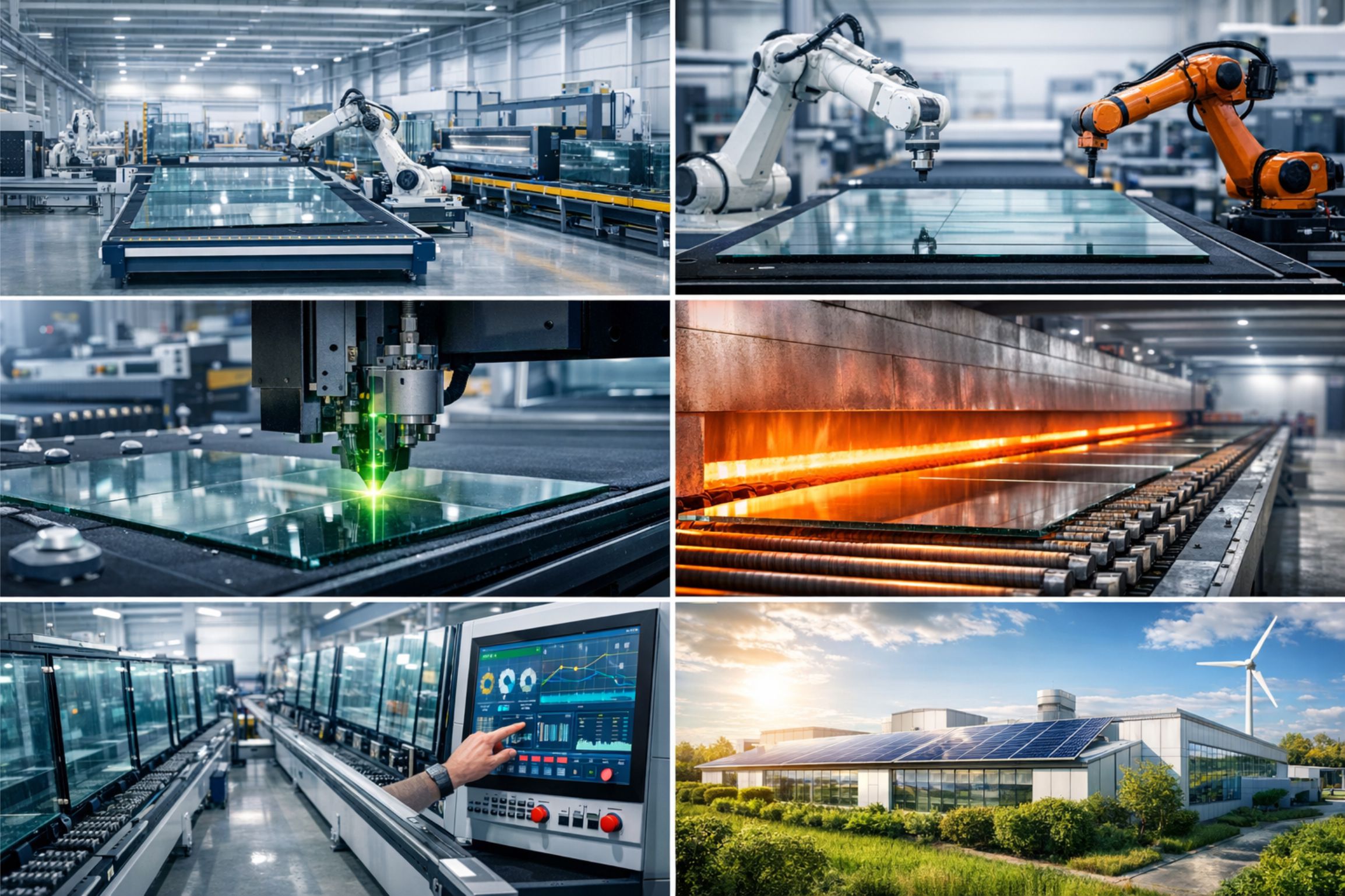
1. Automation: The New Standard in Glass Manufacturing
Gone are the days when glass processing required heavy manual labor.
Today, fully automated machines handle everything from loading raw glass sheets to final inspection.
- Key benefits include:
- Faster production speed
- Reduced human error
- Lower labor costs
- Consistent and accurate output
Industries are now investing more in CNC cutting tables, robotic handlers, and automated washing machines to improve efficiency.
2. High-Precision Cutting & Processing
Cutting is the foundation of glass production, and modern machines now offer:
- Laser-guided accuracy
- Complex shape cutting
- Minimal wastage
- Smooth and clean edges
This precision helps manufacturers meet the growing demand for customization in architecture and interiors.
3. Tempering & Safety Glass Production
With the rise of high-rise buildings and safety standards, tempering machinery has become crucial.
- Modern tempering furnaces provide:
- Uniform heating
- Energy-efficient operation
- Perfect flatness & strength
- Fast cycle times
These machines ensure the glass meets global safety certifications and performance standards.
4. IGU (Insulating Glass Unit) Lines
Energy efficiency is a big focus today. That’s why IGU production lines are in high demand.
They help create double and triple-glazed units with:
- Better thermal insulation
- Noise reduction
- Longer durability
Fully automatic IGU lines also ensure clean sealing, moisture resistance, and perfect alignment.
5. The Role of Smart Technology
Glass machinery is increasingly integrated with:
- IoT sensors
- Real-time monitoring
- Data analytics
- Predictive maintenance
This helps manufacturers reduce downtime, track performance, and improve overall production quality.
6. Sustainability & Energy Efficiency
Modern glass machinery is designed with sustainability in mind.
Energy-efficient furnaces, eco-friendly washing systems, and optimized cutting help reduce:
- Power usage
- Waste
- Water consumption
This not only benefits the environment but also reduces manufacturing costs.
Conclusion
Glass machinery is the backbone of the industry’s growth. With automation, smart technology, and high-precision processing, manufacturers can deliver higher quality products while saving time and cost.
As the demand for architectural, automotive, and smart glass continues to rise, investing in modern machinery is no longer an option—it’s a necessity for staying competitive in the global market.