Q: Why does LandVac Titanium Vacuum Glazing utilise a 0.3mm vacuum cavity and a 55mm*55mm micro-spacer grid?
A: The configuration of LandVac’s vacuum cavity thickness and spacer intervals is dictated by a precise interplay between glass properties, spacer materials, structural mechanics, thermal performance, and advanced fabrication techniques. Following more than 1,000 rigorous simulations and empirical tests, this specific configuration has been identified as the optimal balance for achieving superior product performance and long-term durability.
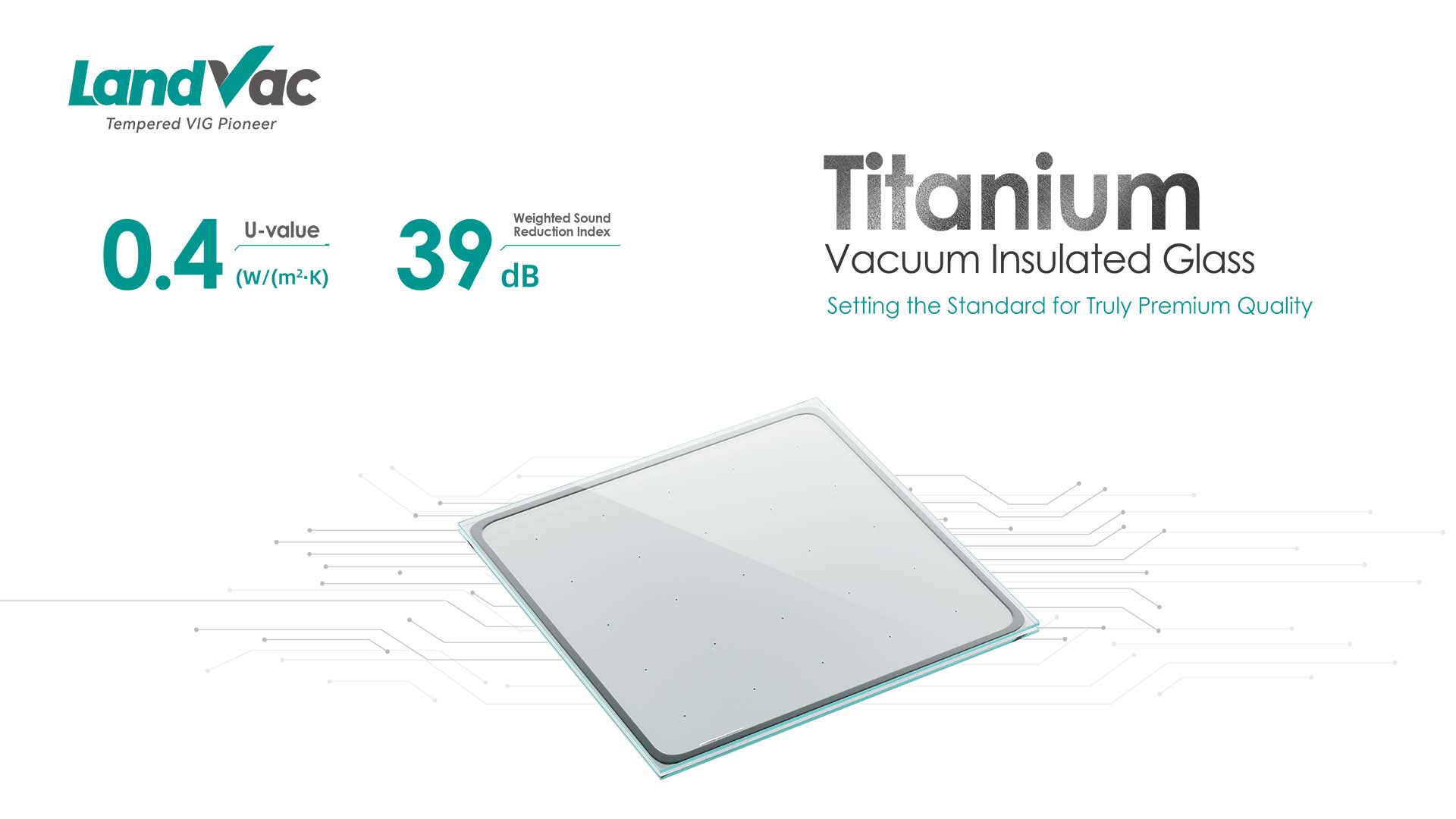
Q: BIPV System Overview: Vacuum Glass Integration and Performance Parameters
A: Our BIPV solutions combine vacuum glass with various PV technologies. Thin-film options (CdTe/Perovskite) feature laminated or composite hollow structures for seamless integration. Crystalline silicon options offer an independent application for building facades. Efficiency and power generation metrics are based on the core PV cell parameters.

Q: By how much can the sound insulation performance of vacuum glass be improved by adding a layer of acoustic film?
A: When the interlayer in ordinary vacuum composite laminated glass is replaced with acoustic film, the overall sound reduction index (Rw) increases by approximately 1dB.
Note: For ordinary laminated glass, the use of acoustic film can increase the sound reduction index (Rw) by 2-3dB.
Website: www.landvac.net