In Conversation With GB, MD Ashok Jain Shares How FUSO Glass Is Redefining Architectural & OEM Glass Manufacturing
Glass Bulletin speaks with FUSO Glass MD Ashok Jain on automation, innovation and growth strategies shaping India’s glass processing industry.
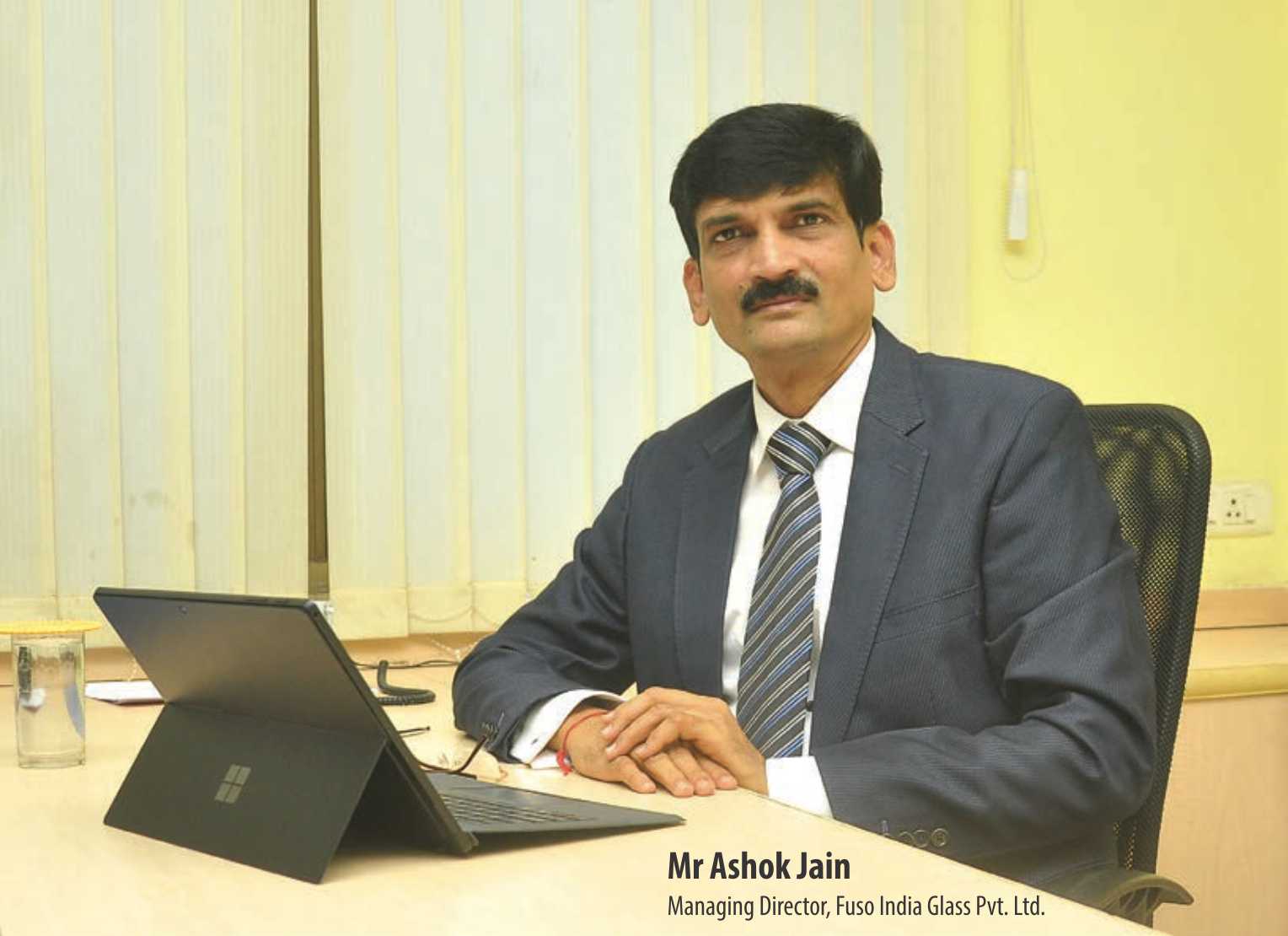
Excerpts from the conversation:
– Could you briefly introduce Fuso India Glass Pvt. Ltd. and share your journey so far as a leading name in architectural and OEM glass processing?
I’m pleased to share the journey and growth story of FUSO Glass. The promoters of FUSO Glass have been associated with the glass industry for over six decades. What began as a modest trading business evolved significantly over the years.
The IT boom of the mid-1990s was a turning point. With the rise of IT parks and major government infrastructure projects, glass transitioned from a basic lighttransmitting element to a structural and aesthetic material. It was now expected to address safety, strength, thermal, acoustic, and design requirements. Recognizing this shift, FUSO made a strategic entry into glass processing.
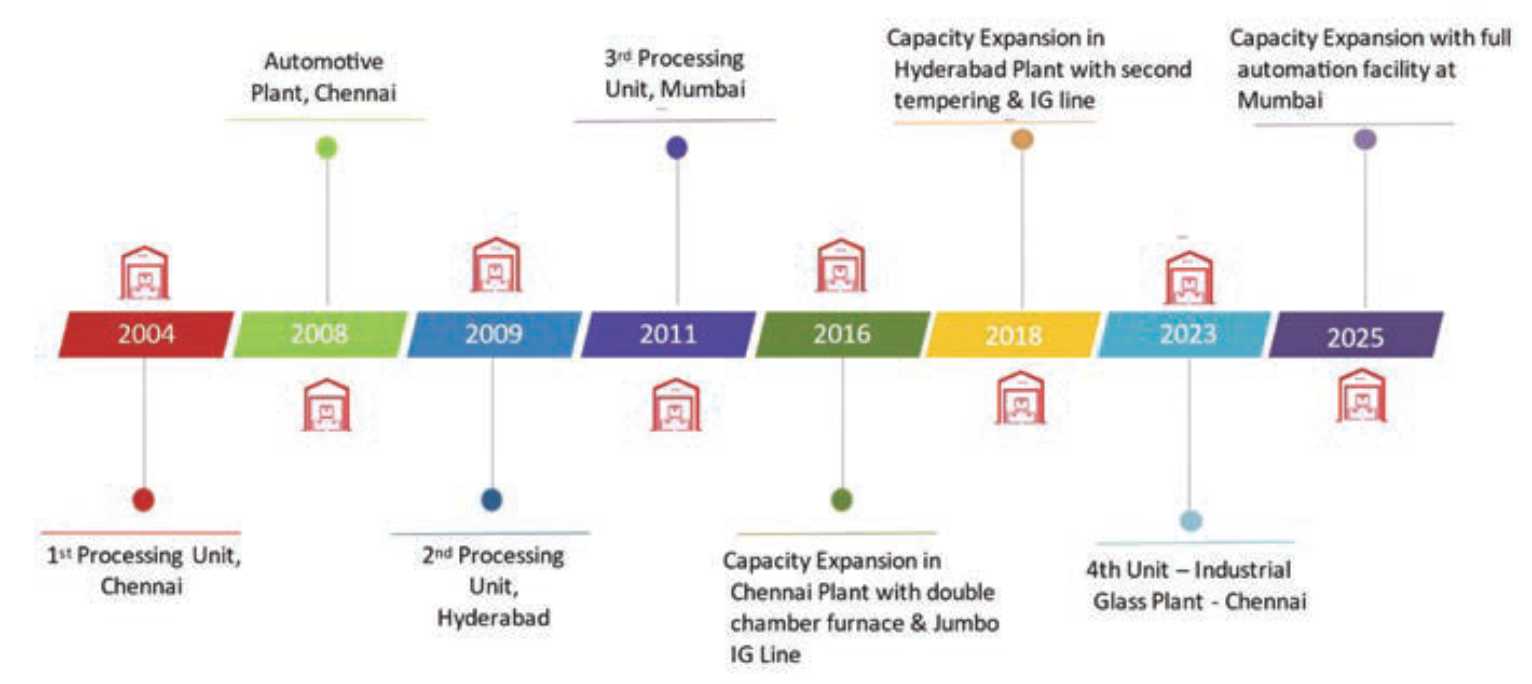
We established our first processing unit in 2004 in Sriperumbudur, Chennai, followed by Hyderabad in 2009 and Mumbai in 2011. In addition to architectural glass, we diversified into automotive, locomotive, and OEM segments to meet growing market demand.
In 2023, we launched India’s first fully automated, state-of-the-art facility in Sriperumbudur, dedicated exclusively to OEM and industrial glass.
In 2025, with the support of Yinrui, China, we launched India’s first fully automated, state-of-the-art facility in Mumbai, dedicated exclusively to architectural glass processing—a milestone driven by our vision to meet the evolving demands of these precision-focused sectors.
Our journey continues with a vision to bring world-class glass solutions to the Indian market. Today, we are recognized for our quality, service, and process innovation with a strong customer focus. FUSO is a Goldrated glass processor under Saint-Gobain’s Quality Excellence Program (QEP).
– What has been the driving vision behind setting up two state-ofthe-art, fully automated facilities in Mumbai and Chennai?
Honestly, the vision of my son Jainik Jain has been the driving force behind the creation of our fully automated, state-of-the-art plants. During and after the COVID period, he recognized that this technology would shape the future of glass processing in India. He played a crucial role throughout from designing the layout to selecting machines and technology.
With the world economy increasingly viewing India as a viable alternative in the global supply chain, we see significant opportunities ahead. Setting up fully automated plants in Mumbai and Chennai is a strategic investment to future-proof our operations. These facilities are a reflection of our commitment to continuous improvement, customer satisfaction, and leadership through technology.
– Can you elaborate on the new architectural glass processing plant in Mumbai? What makes it stand out in terms of technology, capacity, and capabilities?
FUSO is at the forefront of building next-generation smart factories. We take great pride in being the first glass processing company in India to take bold strides toward Industry 4.0. Yinrui’s line is seamlessly connected to our ERP through an MES platform, enabling end-to-end data flow, realtime monitoring and process control.
This advanced setup features online laser marking technology, enabling unique identification of each glass piece through QR codes. As glass moves through various processing stages—from cutting and edge grinding to tempering and insulation—the system ensures zero human intervention, with intelligent automation rotating the glass precisely for each stage.
The integrated buffer system optimizes bed utilization, significantly enhancing overall productivity.

– What types of architectural glass products and solutions will this new facility cater to? Are there any special focus areas such as high-performance façades or jumbo-size glass?
The Mumbai plant is strategically positioned to serve the rapidly expanding architectural glass segment in western India. Driven by the increasing number of skyscrapers and high-rise developments across the region—particularly in the commercial capital—there has been a significant surge in demand for jumbo-sized architectural glass.
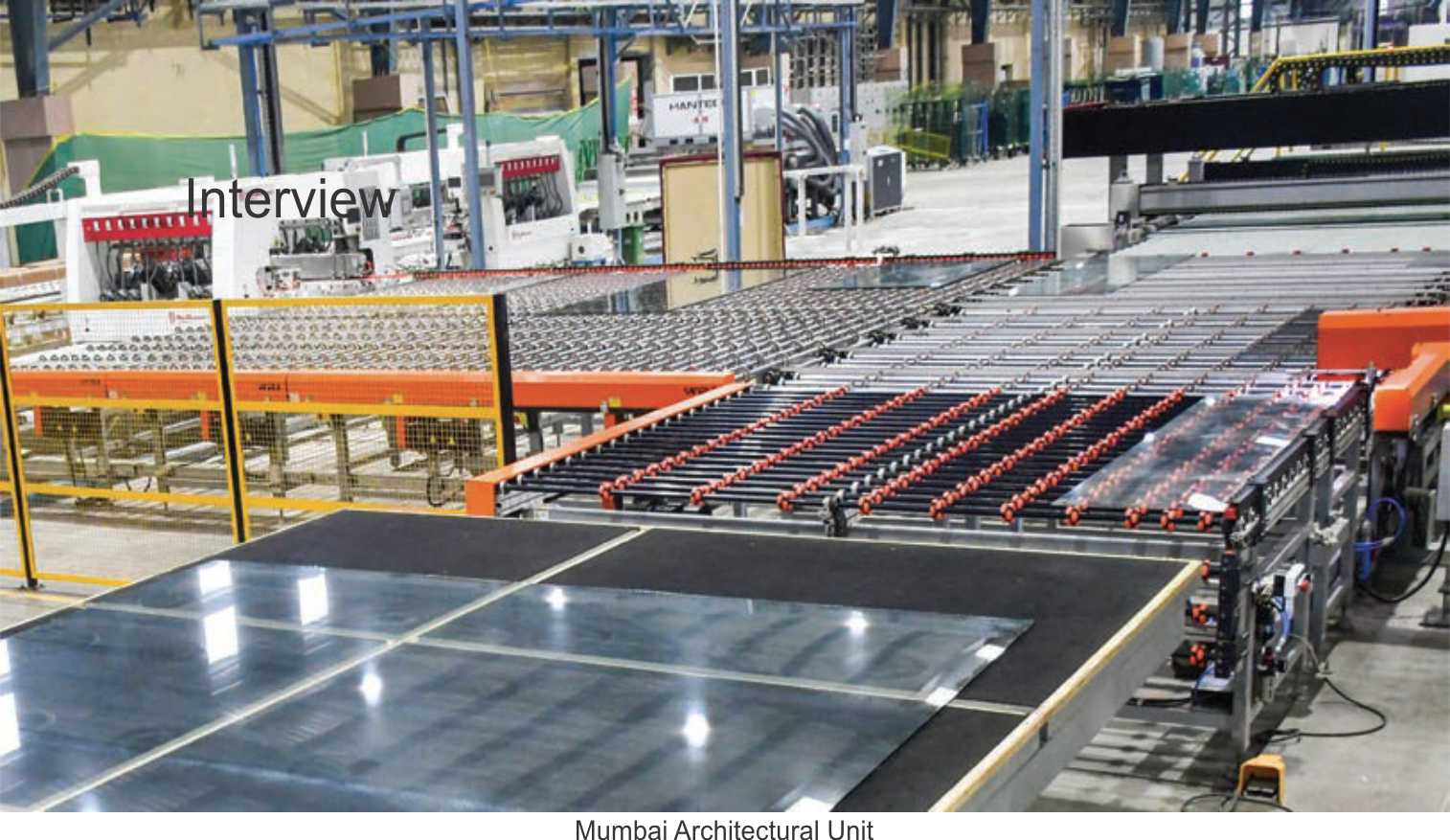
In response, we have recently undertaken a major expansion to address this demand by offering a comprehensive portfolio of highperformance architectural glass solutions. We have invested in world-class technologies, including a state-of-the-art jumbo tempering line from LandGlass and advanced pre-processing systems from HanGlasstec. The facility is further equipped with a robotic Insulated Glass Unit (IGU) line from Hanjiang to support modern façade designs and green building requirements.
To ensure precision, scalability, and consistent quality in jumbo glass production, the plant incorporates a fully automated processing line from Yinrui. This end-to-end automation enables optimized throughput while maintaining the highest standards in Mumbai Architectural Unit architectural glass manufacturing.

– Tell us more about the OEM glass processing unit set up in Chennai. What industries or applications will this plant primarily serve?
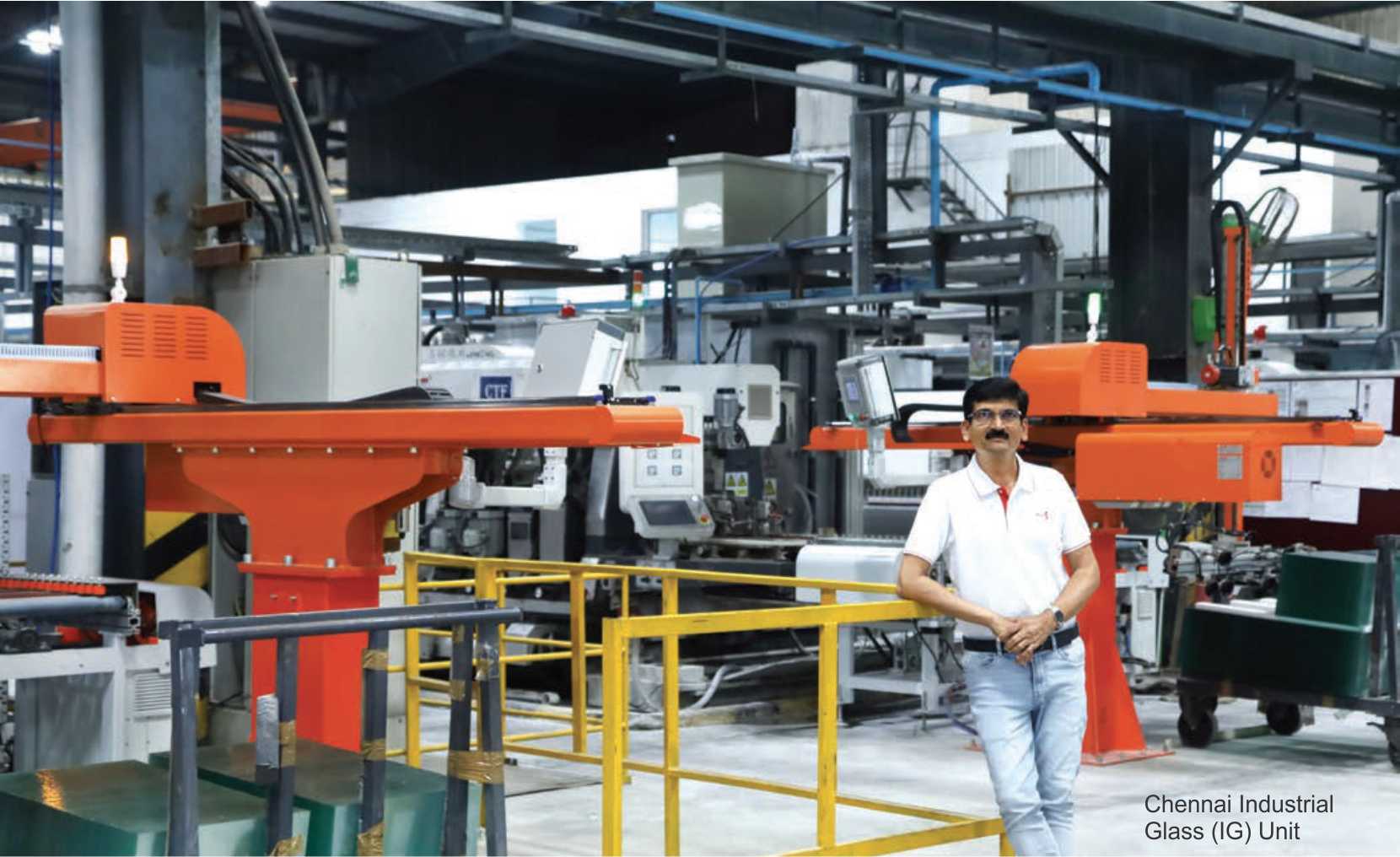
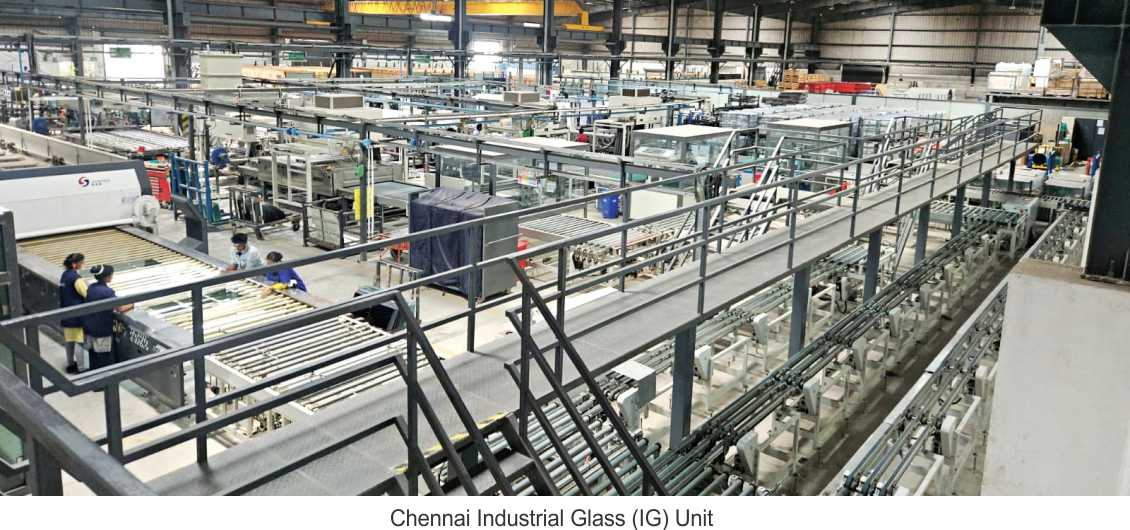
This unit of ours in Chennai is broadly known as the Industrial Glass Unit. It is dedicated to producing glass for various applications such as home appliances, solar panels, and the furniture segment.
It is specially tailored with end-to-end automation for high-volume production with the capability to achieve tight tolerances, quick changeovers, and flexibility—critical for industrial glass applications.
– With OEM demands increasing, how does this Chennai facility enhance your responsiveness and competitiveness in that segment?
Post-COVID, the industrial glass sector experienced a severe supply shortage, as it was predominantly dependent on imports. This gap in the market presented a strategic opportunity for FUSO to step into the segment.
Being located near major automotive and electronics manufacturing hubs, FUSO was well-positioned geographically. However, competing with international players required more than proximity—it demanded world-class quality, zero-defect deliveries and just-in-time supply capabilities.
To meet these expectations, FUSO made the strategic decision to invest in a fully automated production line. This transformation has led to significant reductions in production rejections, logistics lead times, and overall costs, enabling FUSO to be more agile, reliable, and competitive in the industrial glass market.
– What unique technologies or innovations have been incorporated in the Chennai plant to meet high precision and volume requirements?
We have invested in cutting-edge European technology, including high-precision cutting systems and 3-axis CNC grinding and milling machines, integrated with high-speed conveyors and robotic material-handling systems.
The facility features an online edge grinding machine equipped with auto-servo compensation technology to ensure superior accuracy and edge finish.
Additionally, we have implemented a specially engineered solution for online logo printing with a 3-second cycle time, seamlessly integrated with batching conveyors that directly feed into a continuous tempering furnace.
Our end-to-end integrated process includes built-in fail-safe mechanisms, which are critical for ensuring reliability and efficiency in large-volume OEM contracts.
– We understand that Yinrui has supplied cutting-edge machinery and automation systems for these facilities. Could you tell us why you chose Yinrui as your technology partner?
Selecting the right technology partner was no easy task—particularly when aiming for a longterm association built on innovation and advanced capabilities. At FUSO, we were focused on identifying a partner who could offer a comprehensive solution, combining software, system integration, and in-house hardware that operate seamlessly together.
Yinrui stood out with their unwavering commitment to innovation, customization, and sustained support. Their extensive global experience in high speed automated glass processing, coupled with their collaborative approach, made them the ideal partner to help us implement tailored solutions for the evolving demands of the Indian market.
– What are some key machines or systems provided by Yinrui, and how have they added value to your production workflow?
The key systems in place feature precision cutting, automated glass loading, and high-speed conveyors equipped with buffer stations to ensure optimal line balancing and throughput. Intelligent loading into the tempering furnace maximizes bed utilization and enhances energy efficiency.
– How would you describe the experience working with Yinrui—in terms of service, customization, and integration support?
If I have to say in one word—superb. Yinrui has been an exceptional partner: agile, responsive, and deeply involved. From process design to commissioning, their team ensured smooth integration with our systems and trained our staff for seamless operations. Their after-sales support has also been robust.
– With both plants now operational, what kind of growth or transformation do you foresee in your offerings and service delivery?
We are now fully equipped to reduce operational costs and accelerate delivery timelines while meeting high-volume demands, stringent quality standards, and offering highly customized solutions backed by robust service support.
These strategic investments position us as a comprehensive, onestop partner for both architectural and OEM clients across India. This transformation will certainly lead to significant growth for FUSO.
– How do you see India’s architectural and OEM glass markets evolving over the next 3–5 years, especially with automation becoming the new norm?
Both segments are poised for accelerated growth—architectural glass driven by the increasing demand for energy-efficient buildings, and OEM glass by the rise of smart appliances.
Just as AI is transforming various sectors, industrial automation will evolve significantly over the next 3 to 5 years. As an early adopter, FUSO is strategically positioned to capitalize on this shift and gain a strong competitive edge in the industry.
– What message would you like to share with architects, OEM clients, and project consultants looking for high-quality, precision-processed glass?
At FUSO, we are dedicated to providing glass solutions that seamlessly blend aesthetics, performance, and dependability. With our newly automated facilities and a strong emphasis on innovation, we welcome our stakeholders to experience the future of precision glass processing—engineered to meet the evolving demands of tomorrow’s design and functionality standards.
 Source: www.fuso.in