
A Fully Integrated 5400 Sqm Factory Sets New Benchmarks In Automation, Efficiency & Premium Glass Processing
MAC-YUGONG delivers its fifth automation project for BOYU, establishing an advanced jumbo glass factory with seamless digital integration.
BOYU, the renowned glass processor, established a 4,000 sqm automation factory in 2019. In 2025, it invested in a Jumbo glass automation factory (3,300 × 7,000 mm). This marks the fifth automation project completed for BOYU, and once again, the MACYUGONG team delivered exceptional results.
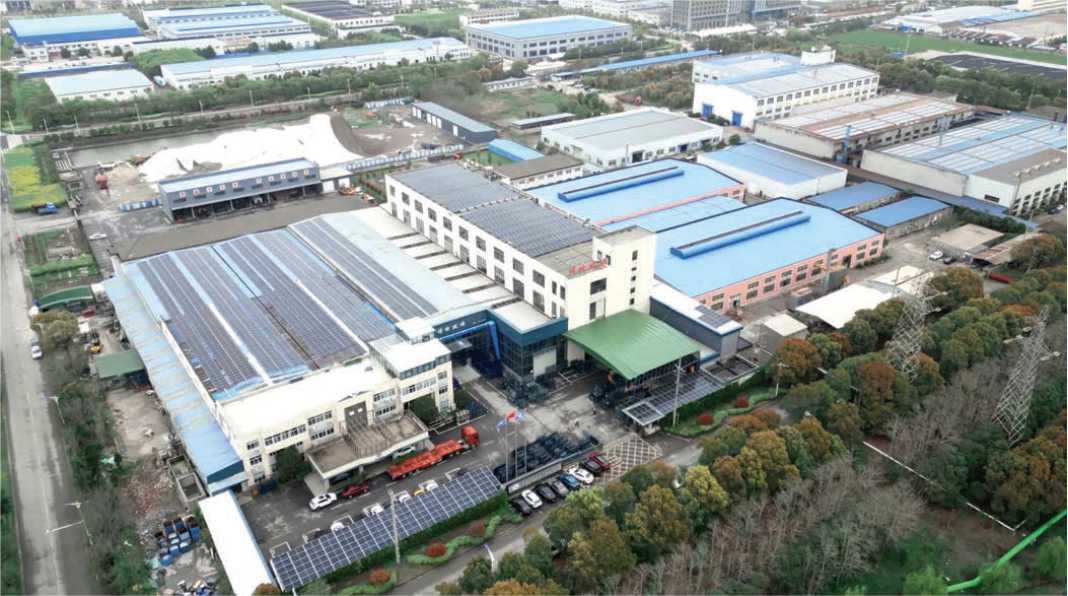
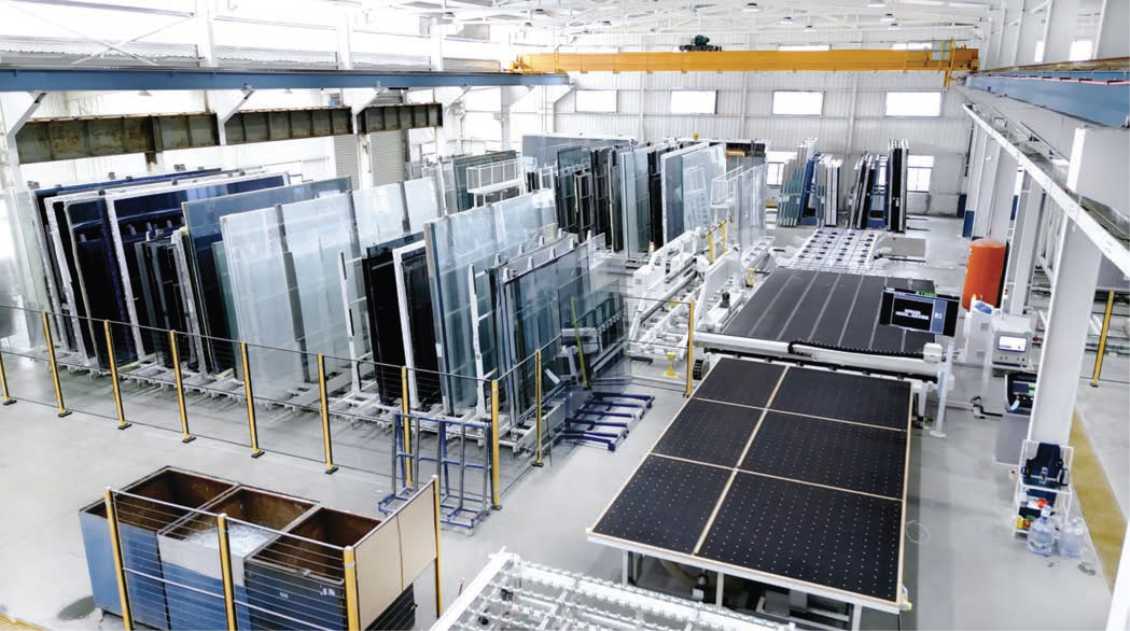
The new Jumbo glass production factory, spanning 5,400 sqm, features a fully integrated setup designed by the MAC-YUGONG team. This includes a raw glass storage system, a 2-in-1 laser marking and cutting line, a double edger, a 35-layer sorting system, a tempering furnace, a vertical sorting system, a PVB lamination line, and a TPS/4SG warm-edge IG line. The factory primarily produces jumbo insulating glass units for premium windows.
Automation System Introduction
1. MAC Warehouse Management System (WMS)
Production begins with the handling of raw glass sheets. Workers use a handheld scanner (PDA) to scan each package, instantly uploading data to the ERP system. This ensures real-time inventory visibility for both offline and online raw glass storage. The ERP system then optimizes based on order structures and communicates with the MES system, forming the basis of precise production planning.
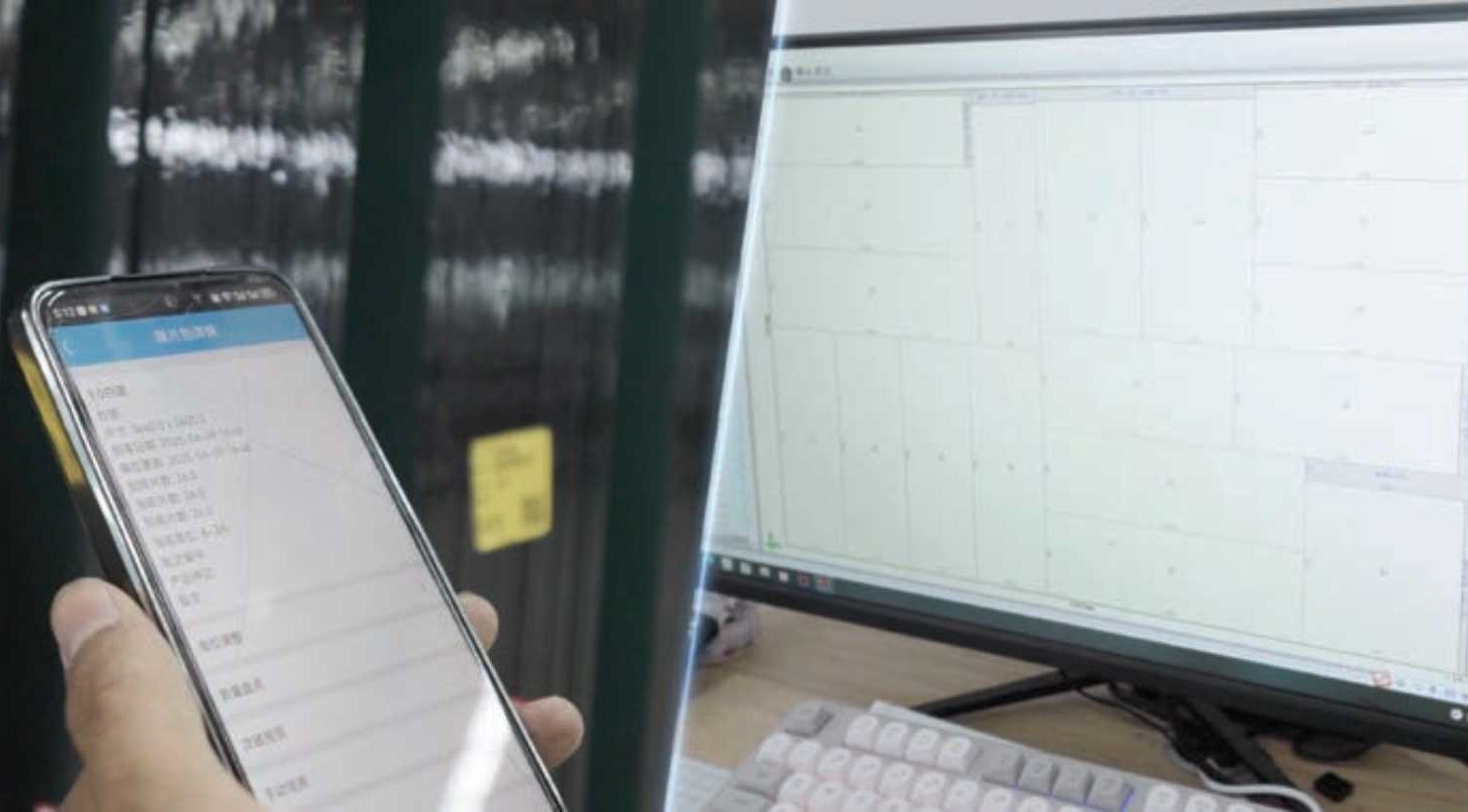
Based on WMS instructions, glass sheets are transported to the warehouse for storage and unpacking. With 32 racks (each storing 1–2 packages), the system meets daily production needs. Shuttle cars transport glass to the loading table as needed, ensuring a smooth flow of materials.
2. Precision Cutting and Identification
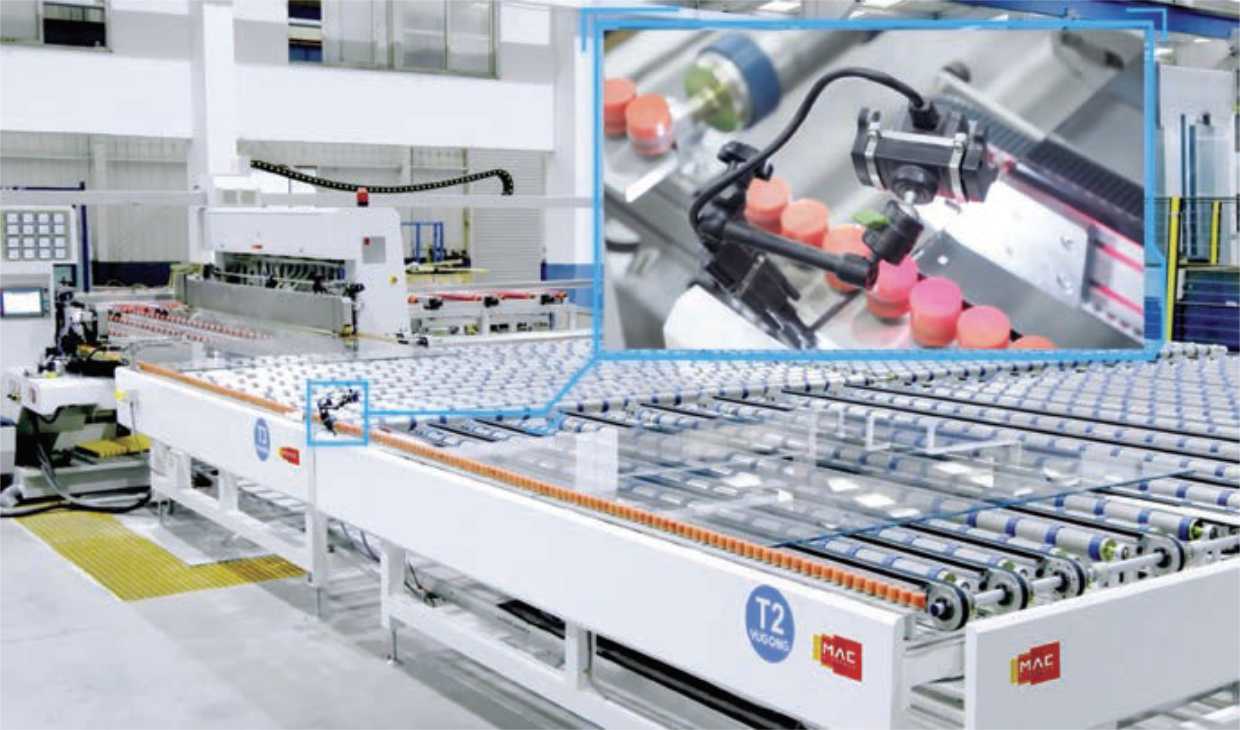
Using advanced algorithms, the ERP system optimizes cutting to maximize raw material usage, saving significant long-term costs. At the laser marking table, each glass sheet is assigned a unique identity, with the ability to mark 3C certifications, QR codes, logos, and more. A 4mm × 4mm barcode enhances traceability and efficiency. Post-cutting, a CCD device records detailed information and feeds it back to the ERP for quality control.
3. Edging Process and Special Handling
The MAC MES system minimizes the frequency of double edger opening/closing. It shares data so the edger auto-adjusts to various sizes, thicknesses, or edge deletion requirements. For example, it automatically removes Low-E coatings where specified. Oversized and small glass sheets requiring drilling are offloaded separately for specialized handling.
4. Horizontal Storage and Sorting System
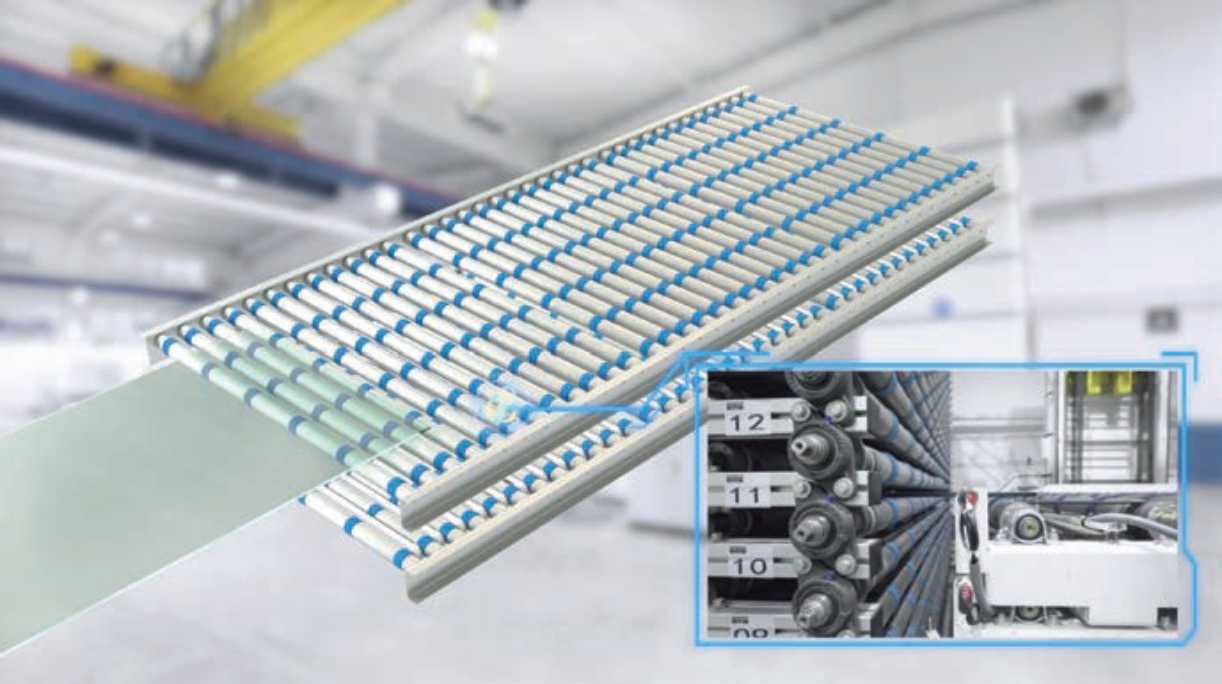
edger to a 35-floor horizontal storage and sorting system. The MES system determines the glass rotation direction using the MACsoft algorithm, optimizing transfer efficiency and ensuring high-quality outputs—especially important for curtain wall production. Another CCD device captures data and updates the MES in real time. The space-saving system includes a cloud ladder with dual functions: the upper layer as an inlet conveyor and the lower layer as an outlet and batching layer with XYZ three-dimensional batching to fully load the tempering furnace.
5. Advanced Batching and Tempering
The MACsoft algorithm pre-batches glasses of different sizes to maximize loading. A second rotary table connects the sorting system to the tempering furnace. Glass sheets are arranged in a three-dimensional layout for optimized batching, guided by three principles:
- Maximum loading capacity
- Order prioritization
- Quality assurance (especially for curtain walls)
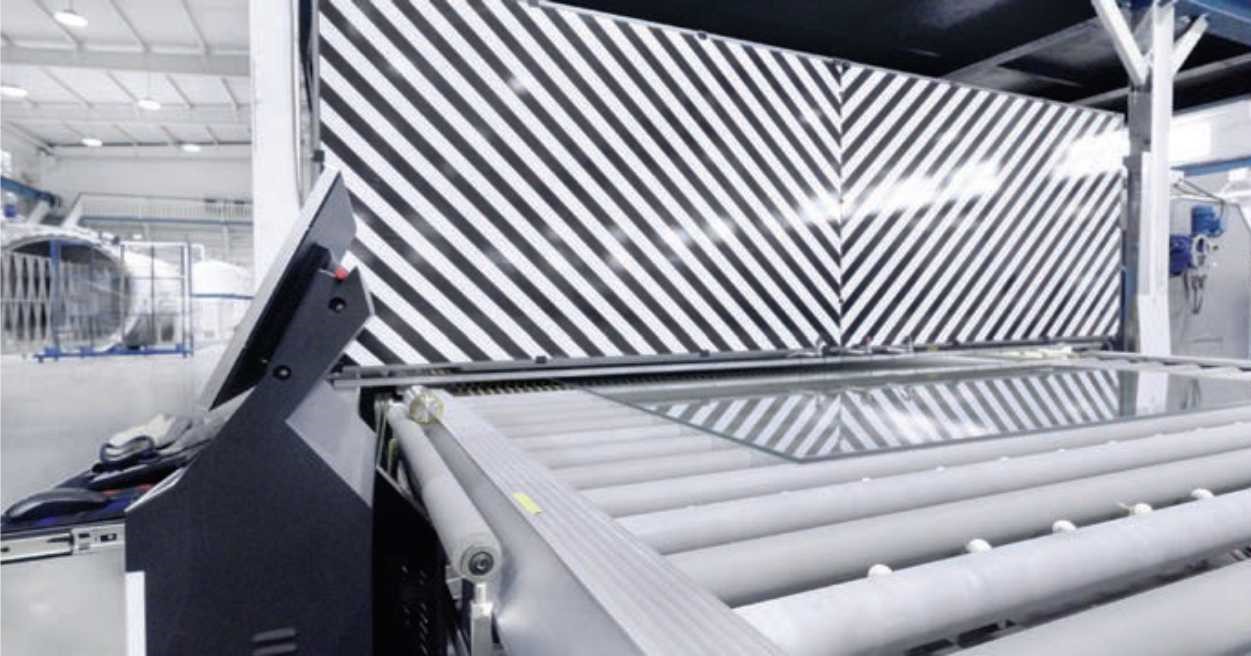
Post-tempering, another CCD device detects defective or self-exposed glass. If found, the MES automatically initiates compensation procedures.
6. Shuttle Systems and Line Integration
The vertical sorting system includes two Jumbo 3,300 × 7,000 mm shuttle cars, five sorting crates, and slideways. This supports PVB lamination, IGU production, and laminated-IGU production.
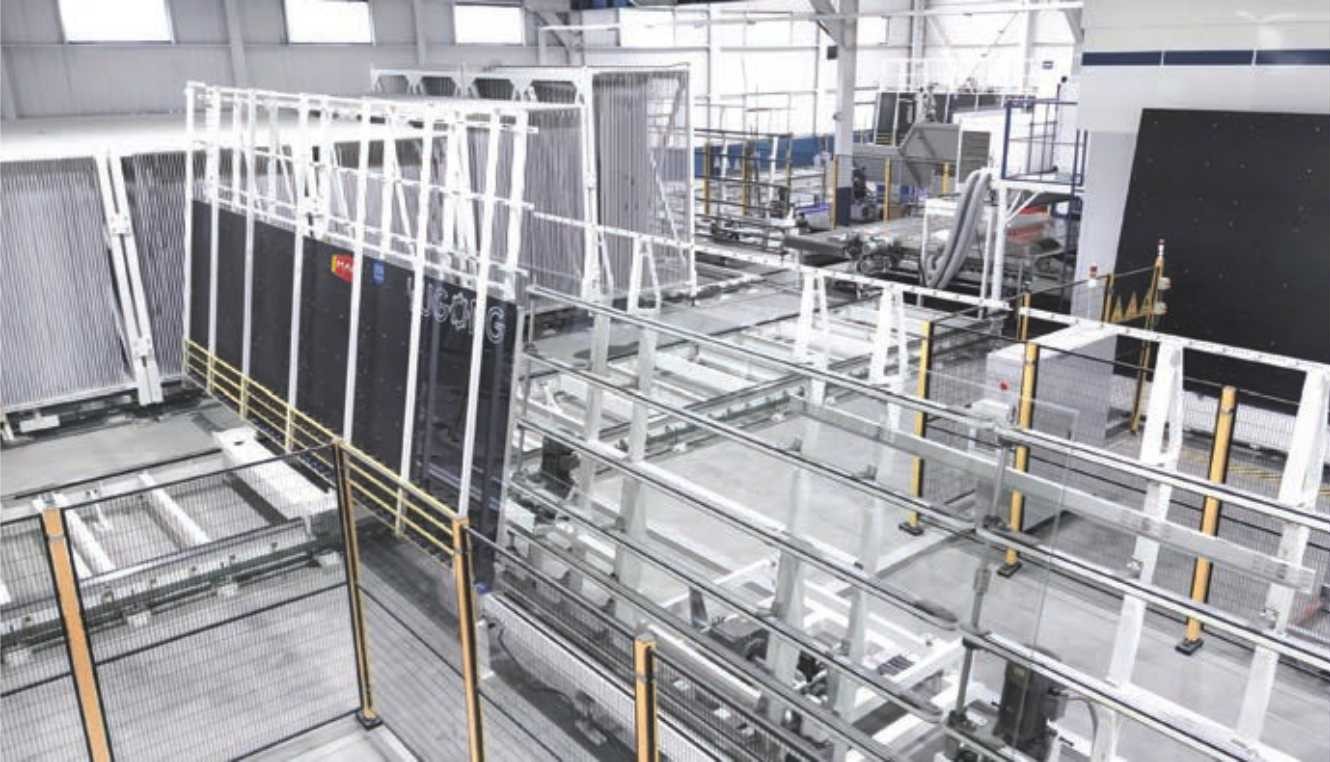
Shuttle #1 transfers glass from the tempering furnace. Laminated glass exiting the autoclave also enters the system via Shuttle #1. Crates with hundreds of slots accommodate varying glass thicknesses and widths. Slots are optimized to store multiple sizes, maximizing utilization.
The MES optimizes pairing before IG and lamination lines, reducing manpower and boosting efficiency. Shuttle #2 then seamlessly directs glass to its respective line, maintaining a continuous flow.
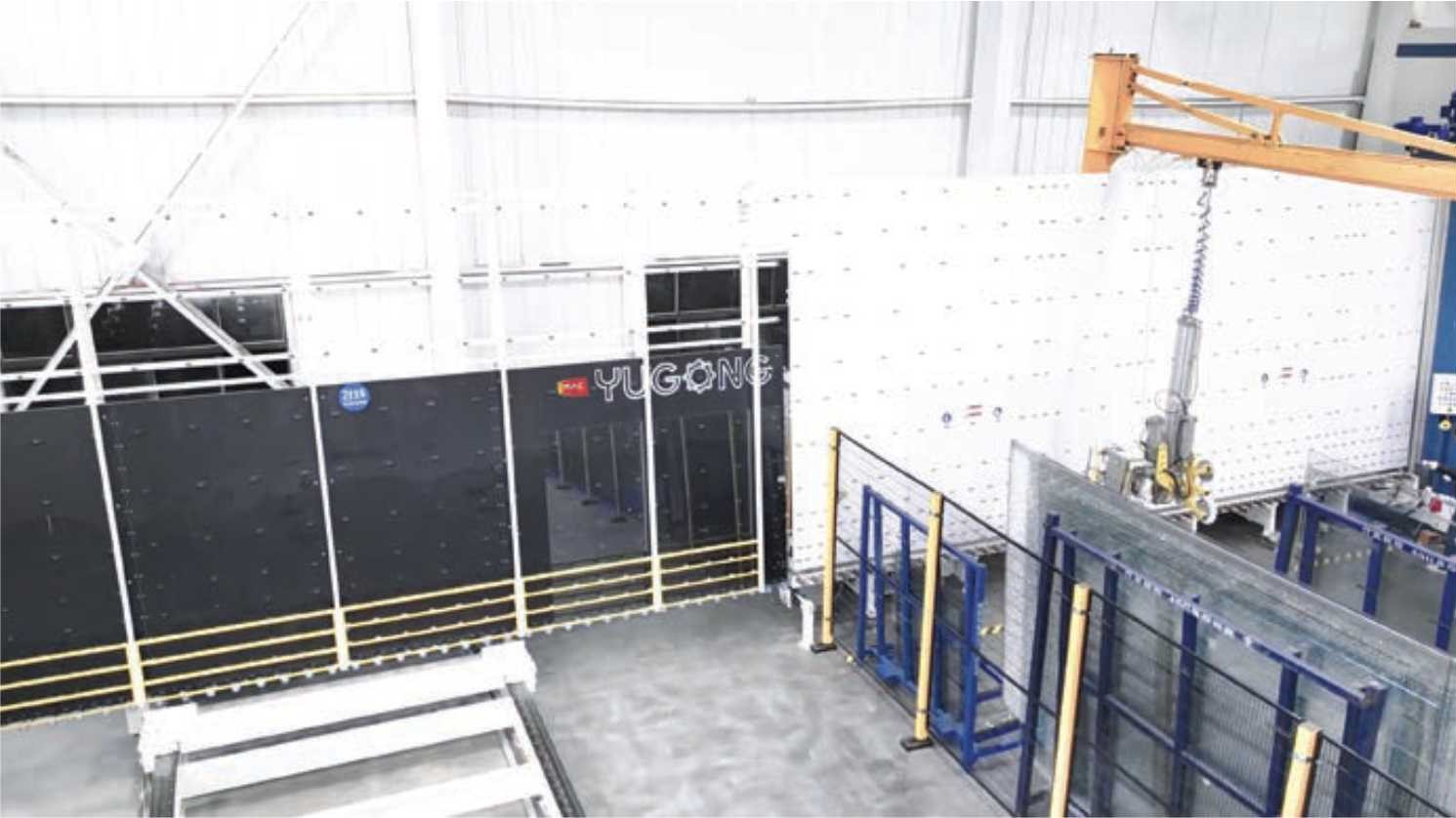
The BOYU Jumbo Glass Automation Factory is a significant milestone in smart manufacturing. With a full suite of MACsoft systems—ERP, MES, and WMS—this facility represents cutting-edge integration of hardware and software.
Beyond producing premium jumbo insulating glass units, this factory sets a new industry standard in efficiency, traceability, and sustainability. MACYUGONG is proud to have partnered with BOYU on five successful projects and looks forward to scaling new heights together in the future.
Source: www.macglastech.com